
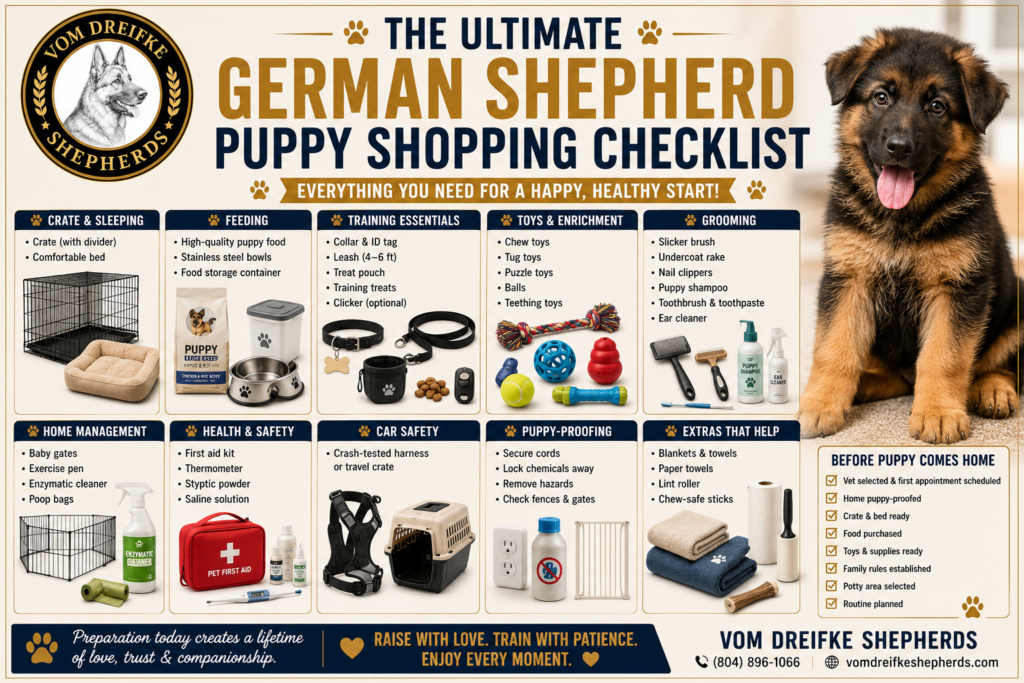
Bringing home a German Shepherd puppy is exciting, but it also comes with plenty of preparation. Having the right supplies before your puppy arrives will help make the transition smoother, reduce stress, and set your new family member up for success.
German Shepherd puppies grow quickly, are highly intelligent, and require quality nutrition, appropriate training, safe chew toys, and a structured environment. Investing in the right products from the beginning can make training easier and help prevent unwanted behaviors.
At Vom Dreifke German Shepherds, we want every puppy owner to feel confident and prepared. This complete shopping checklist includes everything you’ll need before bringing your new German Shepherd puppy home.
Before Pickup Day
Before your puppy arrives, make sure you have:
✔️ Veterinarian selected
✔️ First appointment scheduled
✔️ Puppy-proofed your home
✔️ Family rules established
✔️ Crate assembled
✔️ Sleeping area prepared
✔️ Food purchased
✔️ Toys ready
✔️ Potty area selected
✔️ Cleaning supplies available
Planning ahead helps your puppy adjust much more comfortably during the first few days.
Crate
A crate becomes your puppy’s safe place.
Look for:
- Strong construction
- Good ventilation
- Divider panel
- Easy-to-clean tray
- Double-door design (optional)
For most German Shepherd puppies, a 42-inch crate with a divider works well because it can be adjusted as your puppy grows.
Avoid buying multiple crates if one adjustable crate will last into adulthood.
Dog Bed
Choose a washable bed that provides support while still being comfortable.
For young puppies:
- Machine washable
- Durable fabric
- Non-slip bottom
- Appropriate size
Avoid expensive plush beds if your puppy is still in the heavy chewing stage.
Food and Water Bowls
Choose:
- Stainless steel bowls
- Non-slip base
- Easy to sanitize
- Dishwasher safe
Avoid plastic bowls whenever possible since they can scratch easily and may harbor bacteria.
Puppy Food
Feed the same food your breeder recommends initially.
Changing foods immediately after bringing your puppy home may increase digestive upset during an already stressful transition.
Choose a high-quality large-breed puppy food formulated to support controlled growth.
If you plan to switch foods, do so gradually over 7–10 days unless your veterinarian advises otherwise.
Treats
Healthy training treats make learning much easier.
Choose treats that are:
- Small
- Soft
- Easy to chew
- Low calorie
- Highly rewarding
Since training sessions involve many repetitions, tiny treats are usually more practical than large biscuits.
Food Storage Container
Keep food fresh by storing it in an airtight container.
Benefits include:
- Fresher food
- Reduced moisture
- Pest prevention
- Easier measuring
- Better organization
Always check expiration dates and store food in a cool, dry location.
Collar
Your puppy will need a lightweight collar that fits properly.
Look for:
- Adjustable sizing
- Durable buckle
- Comfortable material
- Identification tag attachment
You should be able to fit approximately two fingers between the collar and your puppy’s neck.
Because German Shepherd puppies grow quickly, expect to adjust or replace the collar as they mature.
Identification Tags
Every puppy should wear an ID tag whenever appropriate.
Include:
- Puppy’s name
- Your phone number
- Optional city
- Microchip notation if desired
A collar tag provides immediate identification if your puppy becomes separated from you.
Leash
Purchase a standard leash approximately 4–6 feet long.
Avoid retractable leashes during early training because they encourage constant pulling and make teaching loose-leash walking more difficult.
Harness (Optional)
Some owners prefer beginning with a properly fitted harness.
Choose one that:
- Fits securely
- Does not restrict shoulder movement
- Is adjustable
- Is lightweight
Ask your trainer or veterinarian if you are unsure which style is best for your puppy.
Baby Gates
Baby gates are one of the most useful purchases for new puppy owners.
They help:
- Limit access
- Prevent accidents
- Separate pets
- Encourage calmness
- Create safe spaces
Management is easier than constantly correcting unwanted behavior.
Exercise Pen
An exercise pen creates a safe play area when you cannot supervise every second.
A pen is helpful for:
- Independent play
- Quiet time
- Visitors
- Cleaning
- Household chores
It provides more room than a crate while still maintaining boundaries.
Puppy Toys
Your puppy should have a variety of safe toys.
Include:
- Rubber chew toys
- Tug toys
- Plush toys
- Balls
- Puzzle toys
- Food-dispensing toys
- Teething toys
Rotate toys every few days to maintain your puppy’s interest.
Puzzle Feeders
German Shepherds thrive on mental stimulation.
Puzzle feeders help:
- Reduce boredom
- Slow eating
- Encourage problem-solving
- Build confidence
Mental exercise often tires puppies more effectively than physical activity alone.
Chew Toys
Teething puppies need safe chewing outlets.
Good choices include:
- Puppy KONG toys
- Rubber chews
- Frozen puppy-safe toys
- Durable teething rings
Avoid toys that splinter or break into small pieces.
Grooming Supplies
Essential grooming tools include:
- Slicker brush
- Undercoat rake
- Nail clippers or grinder
- Puppy shampoo
- Ear cleaner approved by your veterinarian
- Soft towels
- Grooming wipes
Early grooming practice helps puppies become comfortable with handling.
Toothbrush and Toothpaste
Dental care should begin during puppyhood.
Purchase:
- Dog toothbrush
- Dog toothpaste
Never use human toothpaste.
Introduce brushing slowly using positive reinforcement.
Enzymatic Cleaner
House-training accidents happen.
Use an enzymatic cleaner designed for pet accidents to remove odors completely.
Standard household cleaners may not eliminate scent markers.
Poop Bags
Keep bags available:
- During walks
- In your vehicle
- Near your door
- In your training bag
Cleaning up promptly is part of responsible dog ownership.
First Aid Kit
A basic puppy first aid kit may include:
- Gauze
- Non-stick bandages
- Digital thermometer
- Tweezers
- Saline solution
- Styptic powder
- Vet-approved antiseptic
- Emergency contact numbers
Always consult your veterinarian before treating injuries at home.
Car Safety
Never allow your puppy to ride loose inside the vehicle.
Choose:
- Crash-tested harness
- Travel crate
- Seat belt attachment designed for dogs
Safe transportation protects both your puppy and passengers.
Microchip Registration
If your puppy is microchipped, register the chip immediately with your current contact information.
Update the registration whenever you move or change phone numbers.
A microchip only works if the information is current.
Training Supplies
Helpful training items include:
- Treat pouch
- Clicker (optional)
- Long line
- Standard leash
- Small training treats
- Place mat
- Puppy-safe rewards
Keep supplies together so training sessions are easy to start.
Cleaning Supplies
Prepare for puppy life with:
- Paper towels
- Pet-safe disinfectant
- Laundry stain remover
- Lint roller
- Extra towels
- Vacuum designed for pet hair
German Shepherds become heavy shedders as they mature.
Puppy-Proof Your Home
Before your puppy arrives:
✔️ Hide electrical cords
✔️ Secure trash cans
✔️ Remove toxic plants
✔️ Store medications safely
✔️ Lock cleaning supplies away
✔️ Pick up children’s toys
✔️ Remove choking hazards
✔️ Block unsafe stairways if needed
✔️ Secure fences and gates
✔️ Check for escape routes
Think like a curious puppy exploring everything with their mouth.
Create a Routine
Before pickup day, decide on:
- Feeding times
- Potty schedule
- Bedtime
- Exercise routine
- Training sessions
- Family responsibilities
Consistency helps puppies feel secure and learn more quickly.
Recommended Vet Questions
During your first appointment, ask about:
- Vaccination schedule
- Heartworm prevention
- Flea and tick prevention
- Nutrition
- Growth expectations
- Exercise guidelines
- Dental care
- Spaying or neutering
- Emergency clinic information
Write your questions down beforehand so you don’t forget them.
Common Shopping Mistakes
Avoid:
- Buying too many toys at once
- Purchasing oversized treats
- Choosing retractable leashes for beginners
- Buying several crates unnecessarily
- Forgetting cleaning supplies
- Switching food immediately
- Purchasing unsafe chew toys
- Waiting until pickup day to prepare
Planning ahead makes your puppy’s transition much easier.
Printable Puppy Shopping Checklist
Feeding
- □ Large-breed puppy food
- □ Stainless steel food bowl
- □ Stainless steel water bowl
- □ Airtight food container
- □ Training treats
Training
- □ Crate
- □ Divider panel
- □ Exercise pen
- □ Baby gates
- □ Leash
- □ Collar
- □ ID tag
- □ Treat pouch
- □ Clicker (optional)
Toys
- □ Rubber chew toys
- □ Puzzle feeders
- □ Plush toy
- □ Ball
- □ Tug toy
- □ Teething toy
Grooming
- □ Slicker brush
- □ Undercoat rake
- □ Nail clippers
- □ Puppy shampoo
- □ Ear cleaner
- □ Dog toothbrush
- □ Dog toothpaste
Home
- □ Dog bed
- □ Enzymatic cleaner
- □ Paper towels
- □ Poop bags
- □ First aid kit
- □ Car restraint
- □ Puppy-safe gates
Ready for Your New Best Friend
Preparing your home before pickup day allows you to focus on what matters most—building a strong bond with your new German Shepherd puppy.
With the right supplies, a consistent routine, and plenty of patience, you’ll give your puppy the best possible start in life.
At Vom Dreifke German Shepherds, we are committed to helping every family feel confident and prepared long after puppy pickup day. We proudly provide lifetime breeder support and are always happy to answer questions as your puppy grows.
If you’re interested in one of our upcoming litters or would like to learn more about our breeding program, we’d love to hear from you.
📞 Call or Text: (804) 896-1066
🌐 Website: vomdreifkeshepherds.com