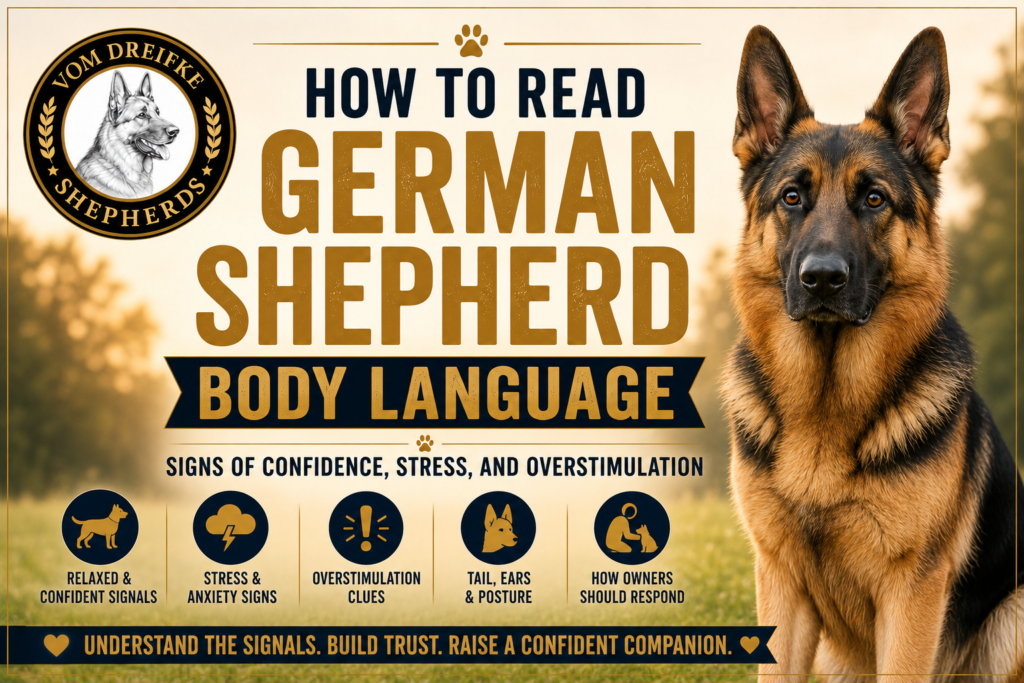
German Shepherds are exceptionally intelligent, observant dogs. They communicate constantly through their posture, facial expressions, ears, tail, movement, and behavior. Learning to recognize these signals can help owners understand what their dog is feeling before excitement, uncertainty, or stress develops into an unwanted reaction.
At Vom Dreifke German Shepherds, we believe that successful training begins with communication. When owners learn to read their German Shepherd’s body language, they can respond more clearly, build greater trust, and help their dog become a confident and well-balanced companion.
Why German Shepherd Body Language Matters
German Shepherds were developed to work closely with people. They tend to be highly aware of their surroundings and sensitive to changes in their environment. Although they may bark, whine, or growl to communicate, much of what they are saying happens silently.
Understanding your dog’s signals can help you:
- Recognize when your dog feels safe and relaxed
- Identify stress before it becomes overwhelming
- Prevent avoidable conflicts with people or other animals
- Improve training and socialization
- Build a stronger relationship based on trust
- Know when your dog needs guidance, space, or rest
Body language should always be evaluated as a complete picture. One signal by itself may not tell the entire story.
Signs of a Relaxed and Confident German Shepherd
A confident German Shepherd does not need to appear aggressive or overly excited. Confidence is often quiet, controlled, and relaxed.
A comfortable dog may display:
- A loose, balanced body
- Relaxed facial muscles
- A naturally open mouth
- Soft eyes
- Ears resting in a neutral position
- A tail carried naturally rather than tightly tucked or rigidly raised
- Smooth, comfortable movement
- Interest in the environment without becoming fixated
A relaxed German Shepherd should be able to notice something new and then redirect attention back to the owner. This ability to observe without becoming overwhelmed is an important sign of emotional stability.
What Your German Shepherd’s Ears May Be Saying
German Shepherd ears are highly expressive. Their position can change quickly depending on what the dog hears, sees, or feels.
Ears Forward
Forward-facing ears often indicate interest, attention, or alertness. The meaning depends on the rest of the dog’s body.
A dog with forward ears and a loose posture may simply be curious. A dog with forward ears, a closed mouth, a stiff body, and an intense stare may be highly focused or uncomfortable.
Ears Pulled Back
Ears held slightly back may indicate affection, excitement, or submission, especially when the body remains loose.
Ears pinned tightly against the head may indicate fear, anxiety, or significant discomfort.
Moving Ears
Ears that move independently or frequently change direction often mean the dog is gathering information. This is normal when a German Shepherd enters a new environment or hears an unfamiliar sound.
Understanding Tail Position and Movement
A wagging tail does not always mean a dog is friendly or comfortable. Tail movement reflects emotional energy, which may include happiness, uncertainty, tension, or excitement.
Relaxed Tail
A tail held naturally with loose movement generally indicates comfort.
High, Stiff Tail
A tail held high and rigid may signal intense alertness, confidence, arousal, or a possible challenge. Look for stiffness throughout the rest of the body.
Tucked Tail
A tail tucked beneath the body usually indicates fear, insecurity, or discomfort.
Fast Wagging
A broad, loose wag that moves the dog’s entire rear end is usually friendly. A short, rapid wag with a stiff body may indicate tension or overstimulation.
Signs of Stress or Anxiety
German Shepherds may show subtle stress signals before they bark, lunge, hide, or attempt to escape. Recognizing these early signs gives owners an opportunity to intervene calmly.
Common stress signals include:
- Repeated lip licking when no food is present
- Yawning when the dog is not tired
- Turning the head or body away
- Avoiding eye contact
- Sudden scratching or sniffing
- Panting without exercise or heat
- Pacing
- Trembling
- Excessive shedding
- Refusing treats
- Lowered posture
- Ears pinned back
- A tightly closed mouth
- Showing the whites of the eyes
- Attempting to hide behind the owner
Stress does not automatically mean a dog is aggressive. It means the dog is struggling with the current situation and may need additional distance, guidance, or time.
Signs of Overstimulation
Overstimulation occurs when a dog becomes too mentally or physically excited to respond appropriately. This is common in young German Shepherds and may happen during play, training, visits, walks, or interactions with other dogs.
Signs may include:
- Jumping repeatedly
- Mouthing hands, clothing, or the leash
- Barking excessively
- Ignoring familiar commands
- Racing around uncontrollably
- Grabbing objects
- Pulling or spinning on the leash
- Becoming fixated on another person or animal
- Having difficulty settling down
An overstimulated dog does not necessarily need more activity. In many cases, the dog needs less stimulation, a quiet environment, structured guidance, and an opportunity to rest.
Puppies especially need frequent sleep. An overtired puppy may become increasingly mouthy, wild, and difficult to redirect.
Fearful Body Language
A frightened German Shepherd may attempt to move away, freeze, hide, or make themselves appear smaller.
Possible signs include:
- Crouching
- Tucking the tail
- Leaning away
- Flattening the ears
- Trembling
- Avoiding contact
- Refusing food
- Freezing in place
- Barking while retreating
- Growling when approached
Never force a fearful dog to interact. Forcing contact can increase anxiety and damage trust. Instead, create distance, remain calm, and allow the dog to observe the situation without pressure.
Fear should be addressed through patient, controlled exposure—not punishment or flooding the dog with an experience they cannot handle.
What a Stiff or Frozen Body Can Mean
Freezing is one of the most important signals owners should learn to recognize.
A dog that suddenly becomes motionless may be communicating serious discomfort. You may also notice:
- A tightly closed mouth
- Hard staring
- Weight shifted forward
- Raised hair along the back
- A rigid tail
- Slow, deliberate movement
- Growling
Do not punish a growl. Growling is a warning that communicates discomfort. Punishing the warning may stop the sound without changing the dog’s emotional state, increasing the chance that the dog could react without warning in the future.
Instead, calmly create space and evaluate what caused the discomfort.
The Meaning of Raised Hackles
Raised hair along a dog’s shoulders or back is known as piloerection. It is an involuntary response caused by emotional arousal.
Raised hackles do not automatically mean aggression. They may appear when a German Shepherd feels:
- Excited
- Surprised
- Uncertain
- Fearful
- Highly alert
- Socially uncomfortable
Consider the dog’s entire posture and the surrounding situation before deciding what the raised hair means.
Playful German Shepherd Body Language
Healthy play usually includes loose, exaggerated movement.
Signs of appropriate play may include:
- Play bows
- Bouncy movement
- Loose, open mouths
- Taking turns chasing or wrestling
- Brief pauses
- Voluntarily returning to play
- Curved rather than stiff body positions
Good play includes breaks. If one dog repeatedly tries to leave, hides, stiffens, or is continually chased without relief, the interaction should be interrupted.
Owners should supervise play and provide short breaks before excitement becomes excessive.
Why Context Is Important
The same behavior can have different meanings depending on the situation.
For example, a German Shepherd may lick their lips because food is nearby. In another situation, lip licking may indicate discomfort. Panting after exercise is expected, while panting in a cool room during a stressful interaction may indicate anxiety.
Consider:
- What happened immediately before the behavior?
- Is the dog’s body loose or stiff?
- Is the dog moving closer or attempting to leave?
- Can the dog still respond to the owner?
- Is the behavior increasing or decreasing?
- Has the dog experienced this situation before?
Looking at the complete situation will provide a more accurate understanding than focusing on one physical signal.
How Owners Should Respond
When your German Shepherd shows stress, uncertainty, or overstimulation:
- Remain calm and avoid adding pressure.
- Increase the distance from whatever is causing concern.
- Redirect your dog with a familiar command when possible.
- Reward calm attention and appropriate choices.
- Avoid forcing physical interaction.
- Keep training sessions short and successful.
- Provide regular rest and quiet time.
- Seek professional guidance when behavior is persistent or escalating.
Owners should not wait until a dog is completely overwhelmed before responding. Early intervention is safer and more effective.
Building Confidence Through Clear Leadership
Clear leadership does not require intimidation or harsh correction. German Shepherds benefit from owners who are calm, fair, consistent, and predictable.
Confidence develops through:
- Age-appropriate socialization
- Consistent household rules
- Positive exposure to new environments
- Obedience training
- Structured walks
- Appropriate mental stimulation
- Clear boundaries
- Adequate rest
- Rewarding calm behavior
- Protecting the dog from overwhelming situations
The goal is not to prevent a German Shepherd from noticing the world. The goal is to teach the dog how to process new experiences and look to the owner for direction.
When to Contact a Professional
Professional help may be appropriate when a German Shepherd:
- Frequently freezes, growls, snaps, or lunges
- Cannot recover after becoming frightened
- Shows increasing anxiety
- Guards food, toys, spaces, or people
- Becomes difficult to control around dogs or strangers
- Displays sudden behavioral changes
- Has bitten a person or animal
Sudden behavior changes can also be related to pain or illness. A veterinary examination may be necessary before assuming the problem is purely behavioral.
Final Thoughts
German Shepherds are expressive dogs that communicate long before they react. Owners who learn to recognize subtle changes in posture, facial expression, movement, and behavior can provide better guidance and prevent many misunderstandings.
Patience, structure, and clear communication help German Shepherds develop into confident, stable companions. The more carefully you observe your dog, the better you will understand what they need from you.
At Vom Dreifke German Shepherds, our commitment extends beyond placing puppies in their new homes. We provide education and lifetime breeder support to help families raise confident, well-mannered German Shepherds.
To learn more about our German Shepherd puppies, training services, and breeding program in Dinwiddie, Virginia, visit vomdreifkeshepherds.com.