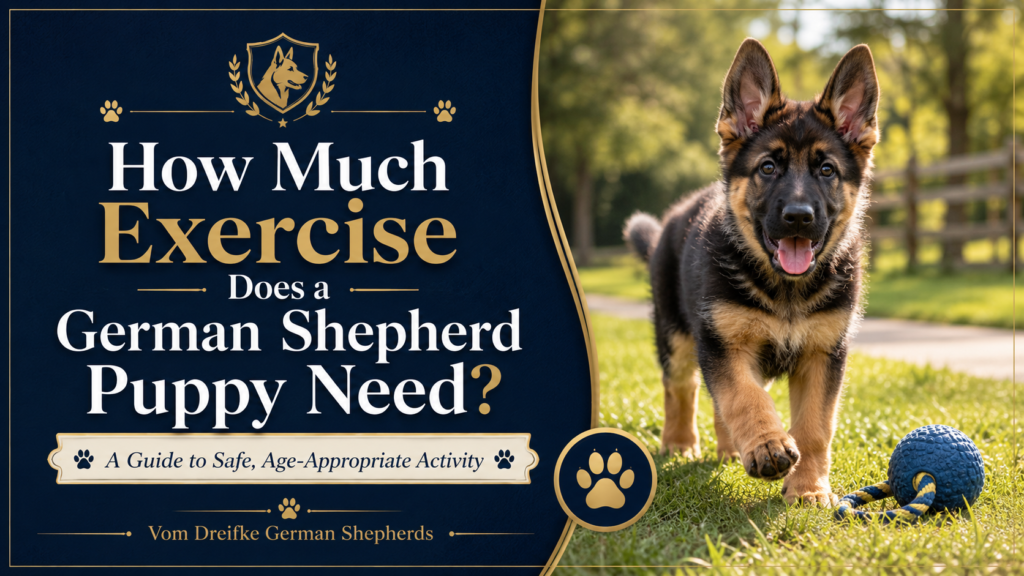
German Shepherd puppies are intelligent, energetic, and naturally curious. They need daily movement, play, training, and mental stimulation, but more exercise is not always better.
A young puppy’s bones, joints, growth plates, muscles, and coordination are still developing. Too little activity may lead to boredom and unwanted behavior, while too much high-impact exercise may place unnecessary strain on the puppy’s growing body.
The best exercise plan includes short, age-appropriate activities throughout the day, balanced with plenty of sleep and recovery.
At Vom Dreifke German Shepherds, we encourage families to focus on controlled activity, positive training, safe exploration, and healthy development rather than trying to exhaust a puppy.
Why German Shepherd Puppies Need Daily Exercise
German Shepherds were developed as intelligent, versatile working dogs. Even as puppies, they benefit from having appropriate ways to use their bodies and minds.
Daily activity can help support:
- Healthy muscle development
- Coordination and balance
- Confidence
- Appropriate socialization
- Better sleep
- Improved focus
- Stronger bonds with family
- Reduced boredom
- Healthy body weight
- Good household behavior
Exercise should be appropriate for the puppy’s age, confidence, physical development, and individual energy level.
The goal is not to tire the puppy until they collapse. The goal is to provide healthy activity without overworking them.
How Much Exercise Does a German Shepherd Puppy Need?
There is no exact amount that is right for every puppy.
Exercise needs may depend on:
- Age
- Size
- Health
- Energy level
- Temperament
- Weather
- Training experience
- Type of activity
- Amount of mental stimulation
- Quality of sleep
A general guideline sometimes used for structured walking is approximately five minutes per month of age, once or twice daily.
For example:
- A 2-month-old puppy may take a short 10-minute walk.
- A 3-month-old puppy may manage approximately 15 minutes.
- A 4-month-old puppy may manage approximately 20 minutes.
- A 6-month-old puppy may manage approximately 30 minutes.
This is only a rough guideline, not a strict medical rule.
Short walks, free play, training, sniffing, and household activity all contribute to the puppy’s total daily exercise.
Pay attention to your puppy rather than focusing only on the clock.
Short Sessions Are Better Than One Long Workout
Young puppies usually benefit from several short periods of activity rather than one long exercise session.
A balanced day may include:
- A short morning walk
- Several brief training sessions
- Supervised outdoor play
- A sniffing game
- Gentle tug
- Safe exploration
- Plenty of naps
Puppies may continue moving even when they are tired because they are excited or trying to follow their owners.
You may need to end the activity and encourage rest before the puppy chooses to stop.
The Difference Between Free Play and Forced Exercise
Free play allows the puppy to move naturally and take breaks when needed.
Examples include:
- Exploring a secure yard
- Playing with an appropriate toy
- Walking around the home
- Gentle play with a compatible dog
- Sniffing in a safe area
Forced exercise requires the puppy to keep moving at a pace or distance chosen by the owner.
Examples include:
- Long-distance running
- Jogging beside a person
- Running beside a bicycle
- Long hikes
- Repetitive fetch
- Extended leash walks
- Continuous stair climbing
Forced exercise should be limited while a German Shepherd puppy is growing.
A puppy playing freely can slow down, lie down, or change direction. A puppy running beside a person may continue even when tired.
Best Exercises for German Shepherd Puppies
Appropriate puppy exercise should support physical development without excessive impact.
Good options include:
Short Leash Walks
Short walks help puppies practice leash skills, experience new environments, and explore different smells.
Keep the pace comfortable and allow time for sniffing.
A puppy walk does not need to cover a long distance to be valuable.
Supervised Yard Play
A secure yard gives your puppy space to explore naturally.
Use toys, gentle games, or short recalls between family members.
Avoid encouraging nonstop running or sharp turns for extended periods.
Gentle Tug Games
Tug can provide physical activity and mental engagement.
Use a soft, puppy-safe tug toy and keep movements controlled.
Do not lift the puppy off the ground or jerk the puppy’s neck.
Teach simple rules such as “take it” and “drop it.”
Scent Games
German Shepherd puppies often enjoy using their noses.
You can:
- Scatter food in the grass
- Hide treats around a room
- Place food in cardboard boxes
- Use a snuffle mat
- Hide a favorite toy
Sniffing provides mental stimulation without requiring high-impact exercise.
Basic Training
Short training sessions are an excellent form of activity.
Practice:
- Name recognition
- Sit
- Down
- Come
- Touch
- Place
- Leave it
- Drop it
- Loose-leash walking
- Calm crate entry
Two to five minutes of focused training may be tiring for a young puppy.
Safe Exploration
Allow your puppy to experience different safe surfaces and environments.
These may include:
- Grass
- Carpet
- Tile
- Gravel
- Concrete
- Rubber mats
- Shallow water
- Low, stable platforms
Exploration can help improve balance, confidence, and coordination.
Mental Exercise Is Just as Important
German Shepherd puppies need more than physical activity.
A puppy that receives only physical exercise may become fitter without learning how to settle or focus.
Mental stimulation can help reduce:
- Boredom
- Destructive chewing
- Excessive barking
- Attention-seeking
- Restlessness
- Frustration
- Overexcitement
Mental activities may include:
- Food puzzles
- Training games
- Scent work
- Problem-solving toys
- Hide-and-seek
- New controlled environments
- Calm observation of people and activity
- Learning household routines
A combination of mental and physical activity is usually more effective than trying to wear a puppy out through running.
Avoid Excessive Jumping
Repeated jumping may place unnecessary strain on a growing puppy’s joints.
Limit activities such as:
- Jumping off furniture
- Jumping from vehicles
- Repeatedly jumping for toys
- Agility jumps
- High-impact obstacle courses
- Leaping from porches or retaining walls
Use ramps or safely lift a small puppy when practical.
Teach your puppy to wait before getting out of a vehicle so you can help control the movement.
German Shepherds may be athletic, but advanced jumping exercises should wait until the dog is physically mature and properly conditioned.
Be Careful With Stairs
Occasional, controlled stair use may be necessary in some homes, but repeated stair climbing should not become a puppy workout.
Supervise your puppy on stairs to prevent:
- Falling
- Racing
- Jumping several steps
- Slipping
- Repeated trips caused by excitement
Use baby gates when necessary.
Carry a young puppy when it is safe and practical, especially on long or slippery staircases.
As the puppy grows, teach slow and controlled stair movement.
Avoid Slippery Floors
Slippery flooring can make it difficult for a puppy to maintain proper footing.
Repeated slipping may strain muscles and joints.
Use:
- Area rugs
- Carpet runners
- Non-slip mats
- Traction-friendly flooring
Keep nails trimmed and paw hair managed to improve traction.
Discourage wild running and sharp turns on hardwood, tile, or other smooth surfaces.
Is Fetch Safe for German Shepherd Puppies?
Short, controlled games of fetch may be appropriate, but repetitive fetch can involve sudden stops, sharp turns, jumping, and high-speed running.
For a young puppy:
- Use a soft toy
- Toss it a short distance
- Keep the surface level
- Limit repetitions
- Avoid high throws
- Stop before the puppy becomes exhausted
- Do not throw on slippery flooring
You can also roll a toy across the ground rather than throwing it into the air.
Fetch should be one activity among many, not the puppy’s only form of exercise.
Can a German Shepherd Puppy Go Running?
Young puppies should not participate in structured long-distance running or jogging.
Their joints and growth plates are still developing, and repetitive movement on hard surfaces may be too demanding.
Avoid having a puppy run:
- Beside a bicycle
- Beside a vehicle
- On a treadmill without professional guidance
- For several miles
- At an adult runner’s pace
- On hot pavement
Wait until your veterinarian confirms that your German Shepherd is physically mature enough for a running program.
When the dog is older, begin gradually and build conditioning over time.
Can German Shepherd Puppies Go Hiking?
Short, easy outings may be appropriate for some puppies, but long or difficult hikes should wait.
Consider:
- Distance
- Elevation
- Temperature
- Trail surface
- Wildlife
- Water availability
- Vaccination status
- The puppy’s age and fitness
Avoid steep climbs, rocky terrain, long distances, and hot weather.
Bring water and plan for frequent breaks.
Be prepared to turn around early if your puppy shows signs of fatigue.
Exercise Before Vaccinations Are Complete
Puppies need activity and socialization before completing their full vaccination series, but they also need protection from contagious diseases.
Ask your veterinarian about local disease risks and safe outdoor activity.
Safer options may include:
- Your private yard
- A trusted family member’s property
- Clean indoor areas
- Carrying the puppy in public
- A puppy stroller or wagon
- Controlled puppy classes
- Meeting healthy, vaccinated dogs
- Short car rides
- Training at home
Avoid heavily traveled dog areas until your veterinarian says they are safe.
These may include dog parks, shared apartment potty areas, and locations where many unknown dogs eliminate.
Exercise in Hot Weather
German Shepherd puppies may overheat more quickly than owners realize.
During warm weather:
- Exercise early in the morning or later in the evening
- Provide fresh water
- Use shaded areas
- Avoid hot pavement
- Keep sessions short
- Watch for excessive panting
- Never leave the puppy in a parked vehicle
Test pavement with the back of your hand. If it feels too hot for your skin, it may be too hot for your puppy’s paws.
Signs of overheating may include:
- Heavy panting
- Excessive drooling
- Weakness
- Bright red gums
- Vomiting
- Stumbling
- Collapse
Overheating is an emergency. Move the puppy to a cooler area and contact a veterinarian immediately.
Exercise in Cold Weather
German Shepherds often tolerate cool temperatures well, but young puppies still require monitoring.
During cold weather:
- Keep outdoor sessions age-appropriate
- Dry wet fur
- Remove snow or ice from paws
- Avoid salted surfaces
- Watch for shivering
- Use a safe cleared potty area
- Limit exposure during extreme cold
Puppies should not be left outside unattended.
Cold tolerance varies by age, coat, health, wind, moisture, and activity level.
Signs Your Puppy Has Had Too Much Exercise
Puppies do not always stop when they should.
Signs of excessive exercise may include:
- Falling behind
- Lying down during activity
- Heavy panting
- Stumbling
- Refusing to continue
- Limping
- Stiffness
- Soreness after rest
- Irritability
- Excessive sleeping beyond normal puppy rest
- Difficulty standing
- Reluctance to use stairs
Stop the activity and allow your puppy to rest.
Contact your veterinarian if limping, pain, weakness, or stiffness continues.
Signs Your Puppy May Need More Activity
A puppy may need additional appropriate activity if they regularly show:
- Restlessness
- Destructive chewing
- Repeated attention-seeking
- Difficulty settling
- Excessive barking
- Constantly stealing household items
- Wild behavior despite adequate sleep
- Frustration during quiet periods
Before adding more exercise, consider whether the puppy may actually be overtired.
Overtired puppies often appear hyperactive and mouthy.
A balanced routine should include activity, training, enrichment, potty breaks, and naps.
The Importance of Sleep
Young puppies may sleep 18 to 20 hours each day.
Sleep is essential for:
- Growth
- Learning
- Memory
- Emotional regulation
- Immune function
- Physical recovery
A puppy that does not get enough sleep may become:
- Mouthy
- Frustrated
- Hyperactive
- Unable to focus
- Barky
- Rough during play
- Difficult to settle
Schedule quiet rest throughout the day.
More exercise is not always the answer to difficult puppy behavior.
Sample Daily Exercise Routine
A young German Shepherd puppy’s routine may look like this:
Morning: Potty break, breakfast, five minutes of training, and a short sniffing walk
Midmorning: Supervised play followed by a nap
Afternoon: Potty break, gentle tug, handling practice, and a scent game
Late afternoon: Short leash walk or yard exploration
Evening: Basic training, calm family time, and an appropriate chew
Throughout the day: Frequent potty breaks and scheduled naps
The exact schedule should be adjusted based on your puppy’s age and energy level.
Exercise and Training Should Work Together
Physical activity is most helpful when combined with training.
During walks and play, practice:
- Responding to the puppy’s name
- Coming when called
- Walking without pulling
- Sitting before doors open
- Waiting for toys
- Releasing objects
- Settling after activity
These skills teach your German Shepherd puppy how to think and respond even when excited.
The goal is to raise a dog that can both participate in activity and relax calmly afterward.
Common Puppy Exercise Mistakes
Avoid these common mistakes:
- Trying to exhaust the puppy
- Long-distance running
- Repetitive jumping
- Excessive fetch
- Too many stairs
- Exercising on slippery floors
- Ignoring signs of fatigue
- Providing no mental stimulation
- Keeping the puppy awake too long
- Exercising during extreme heat
- Comparing the puppy to an adult dog
- Increasing activity too quickly
A puppy’s exercise plan should grow gradually as the dog matures.
When to Contact Your Veterinarian
Contact your veterinarian if your puppy experiences:
- Persistent limping
- Sudden reluctance to move
- Joint swelling
- Pain when touched
- Difficulty standing
- Repeated stiffness
- Loss of coordination
- Exercise intolerance
- Collapse
- Unusual weakness
Do not force a puppy to exercise through pain.
Early evaluation may help identify injuries or developmental concerns.
Building a Healthy, Active German Shepherd
German Shepherd puppies need daily activity, but healthy exercise is about balance rather than intensity.
Provide short walks, training, safe play, mental enrichment, controlled socialization, and plenty of rest.
Avoid repetitive high-impact activities while your puppy’s body is still developing.
As your German Shepherd matures, you can gradually introduce longer walks and more advanced activities with veterinary guidance.
A thoughtful exercise routine can help your puppy develop into a confident, healthy, and well-mannered adult dog.
At Vom Dreifke German Shepherds, we believe proper nutrition, training, socialization, exercise, and rest all work together to support healthy puppy development.
To learn more about our German Shepherd puppies, adoption process, upcoming litters, or training services, contact Vom Dreifke German Shepherds.
Call or text: (804) 896-1066
Website: vomdreifkeshepherds.com