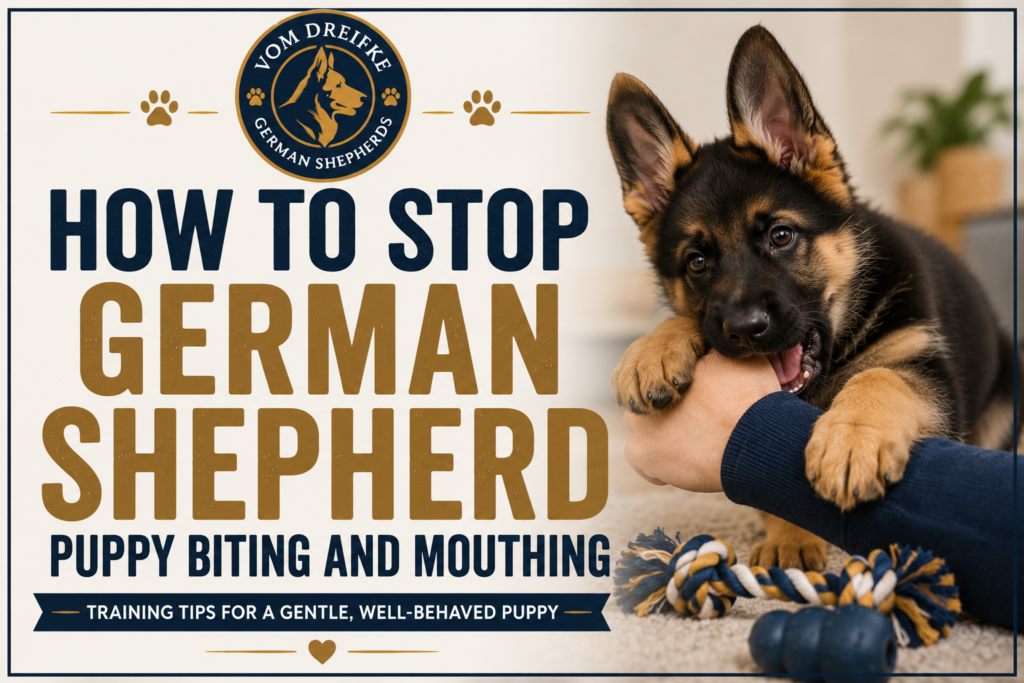
German Shepherd puppies explore the world with their mouths. They may bite hands, grab clothing, chase feet, chew furniture, or become especially mouthy during play.
Although puppy biting is normal, it can quickly become frustrating because German Shepherd puppies are strong, energetic, and highly intelligent. Their sharp puppy teeth can hurt, even when the puppy is only trying to play.
The goal is not to punish your puppy for using their mouth. Instead, you want to teach them which items are appropriate to bite and how to interact gently with people.
At Vom Dreifke German Shepherds, we encourage families to manage puppy biting with consistency, redirection, rest, training, and age-appropriate expectations.
Why Do German Shepherd Puppies Bite?
Puppy biting may happen for several reasons.
Your German Shepherd puppy may be:
- Playing
- Teething
- Exploring
- Overtired
- Overstimulated
- Seeking attention
- Frustrated
- Excited
- Hungry
- Needing a potty break
- Trying to begin a game
Young puppies naturally use their mouths while interacting with littermates. When they move into a new home, they may continue using the same play style with people.
Puppies do not automatically understand that human skin and clothing are more sensitive than another puppy’s fur.
They need calm, consistent guidance.
Is German Shepherd Puppy Biting Normal?
Yes. Mouthing and biting are normal puppy behaviors.
Most puppies begin improving as they mature, complete teething, and learn better impulse control.
However, normal does not mean the behavior should be ignored.
Without guidance, biting may become more intense or continue longer than necessary.
Early training helps your puppy learn:
- Hands are not toys
- Clothing should not be grabbed
- Calm behavior earns attention
- Toys are appropriate for biting
- Play stops when biting becomes too rough
- Rest is necessary when overstimulated
The way you respond consistently matters more than reacting strongly.
When Does Puppy Teething Begin?
Puppies begin losing their baby teeth and growing adult teeth during the first several months of life.
Many puppies experience increased chewing and mouthing while teething.
Signs of teething may include:
- Chewing more often
- Red or sensitive gums
- Small amounts of blood on toys
- Missing baby teeth
- Increased drooling
- Restlessness
- Seeking different chewing textures
Provide safe, age-appropriate chew toys to help satisfy this natural need.
Never give your puppy an item that is small enough to swallow or hard enough to damage developing teeth.
Redirect Biting to an Appropriate Toy
Redirection is one of the most effective ways to manage puppy biting.
Keep toys within reach throughout the areas where your puppy spends time.
When the puppy begins biting your hands or clothing:
- Stop moving your hands.
- Remain calm.
- Present an appropriate toy.
- Encourage the puppy to bite the toy instead.
- Praise when the puppy makes the correct choice.
Good redirection toys may include:
- Soft tug toys
- Puppy-safe rubber toys
- Braided fleece toys
- Durable plush toys
- Age-appropriate chew toys
Rotate toys regularly so they remain interesting.
Avoid waiting until the puppy is already extremely excited. Redirection works best when used early.
Stop Play When Biting Becomes Too Rough
Your puppy should learn that rough biting causes play and attention to stop.
If your German Shepherd puppy bites too hard:
- Stop interacting.
- Stand still or calmly move away.
- Avoid waving your hands or feet.
- Pause for several seconds.
- Resume interaction when the puppy is calmer.
If the puppy immediately begins biting again, calmly end the play session.
You may step behind a baby gate or move out of reach briefly.
This is sometimes called a reverse timeout because the person removes themselves instead of placing the puppy into punishment.
Keep the break short. The goal is to show the puppy that rough biting makes the fun stop.
Avoid Pulling Your Hands Away Quickly
Fast movement can trigger a German Shepherd puppy’s instinct to chase and grab.
When a puppy bites your hand, pulling away suddenly may make the interaction feel like a game.
Instead:
- Freeze briefly
- Keep your hand still
- Redirect with a toy
- Calmly disengage
- Avoid squealing or dramatic reactions
Some puppies become more excited when people yelp loudly.
Use the response that helps your individual puppy calm down rather than increasing excitement.
Do Not Use Your Hands as Toys
Rough hand play can confuse a puppy.
Avoid encouraging your German Shepherd puppy to:
- Chase fingers
- Bite hands
- Wrestle with arms
- Grab sleeves
- Attack feet under blankets
- Tug on clothing
These games may seem harmless when the puppy is small, but they become more difficult as the dog grows stronger.
Use toys during interactive play so your puppy learns what is appropriate to grab.
Use Tug Games With Rules
Tug can be an excellent game for German Shepherd puppies when it is structured properly.
Teach simple rules:
- The puppy waits before taking the toy
- Teeth remain on the toy
- The game pauses if teeth touch skin
- The puppy releases the toy when asked
- The game begins and ends calmly
Tug can help satisfy natural biting and pulling behavior while building engagement with the owner.
Keep sessions short and avoid jerking the puppy’s neck or lifting the puppy off the ground.
Choose a soft toy suitable for a young dog.
Teach “Leave It”
“Leave it” teaches your puppy to disengage from something before taking it.
Begin with a treat inside your closed hand.
Allow the puppy to sniff, lick, or investigate without receiving the treat.
The moment the puppy backs away, say “yes” or use your reward marker and offer a different treat from your other hand.
Gradually add the words “leave it.”
Practice with low-value objects before expecting your puppy to leave exciting items such as shoes, clothing, or food.
Never chase your puppy when they take something. Chasing may turn stealing into a game.
Teach “Drop It”
“Drop it” teaches your puppy to release something already in their mouth.
Begin with a toy your puppy enjoys.
Offer a treat near the puppy’s nose.
When the puppy releases the toy, say “drop it,” reward, and then return the toy.
Returning the toy helps the puppy learn that releasing an object does not always mean losing it permanently.
Avoid pulling items forcefully from your puppy’s mouth unless there is an immediate safety risk.
Forced removal may increase guarding behavior in some dogs.
Reward Calm Behavior
Owners often give attention when a puppy is biting, jumping, or misbehaving but overlook calm behavior.
Reward your German Shepherd puppy when they:
- Sit quietly
- Lie down
- Chew an appropriate toy
- Rest near the family
- Approach without biting
- Keep four paws on the floor
- Gently take a treat
- Remain calm during petting
The behavior you reward is more likely to happen again.
Keep small treats nearby so you can recognize good choices throughout the day.
Make Sure Your Puppy Is Getting Enough Sleep
Overtired puppies often become extremely mouthy.
Young puppies may need 18 to 20 hours of sleep each day.
Signs your puppy may need a nap include:
- Increased biting
- Zooming
- Barking
- Ignoring familiar cues
- Grabbing clothing
- Rough play
- Frustration
- Inability to settle
When your puppy becomes wild or impossible to redirect, they may not need more exercise. They may need rest.
Take the puppy outside for a potty break, then guide them calmly into their crate or quiet resting area.
Do not use the crate angrily. The nap should remain a normal part of the daily routine.
Avoid Overstimulation
Too much activity can make biting worse.
German Shepherd puppies may become overstimulated by:
- Long play sessions
- Too many visitors
- Rough play with children
- Excessive exercise
- Busy public environments
- Multiple dogs
- Constant handling
- Lack of quiet time
Balance activity with rest.
Short training sessions, sniffing games, gentle play, and controlled exploration are often more helpful than nonstop physical activity.
Give Your Puppy Appropriate Mental Stimulation
German Shepherds are intelligent and need opportunities to think.
Mental enrichment can reduce boredom-related biting and destructive behavior.
Appropriate activities may include:
- Basic obedience training
- Food puzzle toys
- Snuffle mats
- Hide-and-seek games
- Scent searches
- Short leash walks
- Scatter feeding
- Name recognition games
- Simple place training
- Safe chew activities
Keep activities age-appropriate and supervised.
Mental work can help your puppy feel satisfied without placing excessive strain on developing joints.
Manage Biting Around Children
Children may accidentally increase puppy biting by running, screaming, waving their hands, or pulling away quickly.
Always supervise interactions between puppies and children.
Teach children to:
- Stand still if the puppy chases
- Avoid running from the puppy
- Keep toys available for redirection
- Stop playing if biting becomes rough
- Avoid hugging or climbing on the puppy
- Leave the puppy alone while sleeping
- Ask an adult for help
Use baby gates or exercise pens when the puppy becomes too excited.
Children should not be responsible for managing intense puppy biting on their own.
What to Do When the Puppy Bites Pants or Feet
German Shepherd puppies often chase moving feet or grab pant legs.
When this happens:
- Stop walking.
- Avoid kicking or shaking your leg.
- Present a toy.
- Reward the puppy for releasing the clothing.
- Resume walking calmly.
Practice walking around the room while rewarding your puppy for staying beside you without grabbing.
Loose clothing may be especially tempting, so manage the environment during the early training period.
Use an Indoor Leash for Management
A lightweight leash can help you guide your puppy without grabbing their collar repeatedly.
While directly supervised, allow the puppy to drag a lightweight leash indoors.
You can use it to:
- Interrupt clothing grabbing
- Guide the puppy away from furniture
- Prevent chasing children
- Move the puppy toward a toy
- Lead the puppy to a quiet area
Never leave a puppy unattended while dragging a leash.
The leash can become caught on furniture or other objects.
Avoid Physical Punishment
Do not hit, shake, pin, muzzle-grab, or hold your puppy’s mouth closed.
Physical punishment may cause:
- Fear
- Confusion
- Defensive behavior
- Increased excitement
- Loss of trust
- Avoidance of handling
- More intense biting
German Shepherds are sensitive, intelligent dogs. Harsh responses may damage the relationship without teaching the puppy what to do instead.
Focus on redirection, management, reinforcement, and clear boundaries.
Avoid Holding the Puppy Down
Some outdated advice recommends rolling a puppy onto their back or holding them down to show dominance.
This method is unnecessary and may be frightening.
Puppies do not need to be physically dominated.
They need:
- Predictable routines
- Consistent rules
- Appropriate outlets
- Positive training
- Calm leadership
- Supervision
- Rest
- Clear consequences
Trust and communication create a stronger foundation than physical force.
Create a Daily Routine
A structured schedule can reduce biting caused by hunger, fatigue, boredom, or excess energy.
A typical routine may include:
- Potty break
- Meal
- Short training session
- Supervised play
- Potty break
- Nap
- Mental enrichment
- Gentle socialization
- Another nap
- Calm family time
- Bedtime
Puppies often behave better when they know what to expect.
A routine also makes it easier for owners to recognize when biting is connected to a specific need.
Common Puppy-Biting Mistakes
Avoid these common mistakes:
- Playing with the puppy using your hands
- Allowing biting sometimes but correcting it other times
- Giving too much freedom
- Waiting until the puppy is overstimulated
- Using punishment
- Pulling hands away quickly
- Encouraging children to run from the puppy
- Failing to provide enough sleep
- Providing no appropriate chew options
- Expecting the behavior to disappear immediately
- Keeping the puppy awake too long
- Responding differently each time
Consistency among all household members is essential.
When Does German Shepherd Puppy Biting Improve?
Most puppies improve gradually as they:
- Complete teething
- Develop better impulse control
- Learn household rules
- Receive consistent training
- Get enough sleep
- Build appropriate play habits
- Mature emotionally
Many owners notice significant improvement between four and seven months of age, although every puppy develops differently.
Some German Shepherds remain mouthy longer because of their energy, working drive, or play style.
Continue reinforcing appropriate behavior rather than assuming the puppy will simply outgrow everything.
When Should You Ask for Professional Help?
Normal puppy mouthing is usually playful, excited, or related to teething.
Seek guidance from a qualified trainer or veterinarian if your puppy:
- Bites with unusual intensity
- Breaks skin frequently
- Guards food or toys
- Becomes stiff before biting
- Growls when handled
- Reacts aggressively around specific triggers
- Cannot be safely redirected
- Shows sudden behavior changes
- Appears painful
- Becomes fearful during ordinary handling
Pain, fear, resource guarding, or medical problems may contribute to biting.
Early professional guidance can prevent problems from becoming more difficult.
Building Better Habits
German Shepherd puppy biting can be exhausting, but it is a temporary stage that improves with patience and consistency.
Redirect biting to appropriate toys, stop play when the puppy becomes too rough, reward calm behavior, provide enough sleep, and maintain a predictable daily routine.
Your puppy is not trying to be bad. They are learning how to live in a human household.
With calm guidance and clear expectations, your German Shepherd puppy can develop better impulse control and learn to interact gently with the people they love.
At Vom Dreifke German Shepherds, we believe ongoing breeder support is an important part of helping families raise confident, well-adjusted dogs.
To learn more about our German Shepherd puppies, adoption process, upcoming litters, or training services, contact Vom Dreifke German Shepherds.
Call or text: (804) 896-1066
Website: vomdreifkeshepherds.com